

Last Updated: October 27, 2026
Quick Summary
To stop your cat from eating too fast, use a slow feeder bowl with shallow depth, wide gentle ridges, a non-slip base and dishwasher-safe material, or turn mealtime into foraging with puzzle feeders like treat balls and maze boards. Rule out medical causes with a vet first, since frequent regurgitation, weight loss, blood in vomit or refusing food are red flags.
- Causes of fast eating are usually competition, insecurity or boredom, not hunger.
- Pick a slow feeder with shallow depth so whiskers don't touch the sides.
- Puzzle options include treat balls, maze boards, lick mats and DIY muffin-tin feeders.
- Track meal duration and regurgitation for a week, then adjust the feeder or portion size.
Table of Contents
- Why Your Cat Eats Too Fast and What It Signals
- When Your Cat Eats Too Fast and Vomits: Regurgitation vs. Vomiting
- Slow Feeder Bowl for Cats: How to Choose and Introduce One
- Puzzle Feeder for Cats: Turning Mealtime Into Foraging
- Feeding Cats Smaller Meals: Portions, Frequency, and Multi-Cat Fixes
- Frequently Asked Questions
Why Your Cat Eats Too Fast and What It Signals
If your cat eating too fast is the reason dinner disappears in under a minute, the cause is usually competition, insecurity, or plain boredom, not hunger.
Other possible factors to consider:
- Food competition from other pets nearby
- Food insecurity after a stint as a stray
- Boredom when mealtime is the day's only event
- Learned habit from a kittenhood of rushed meals
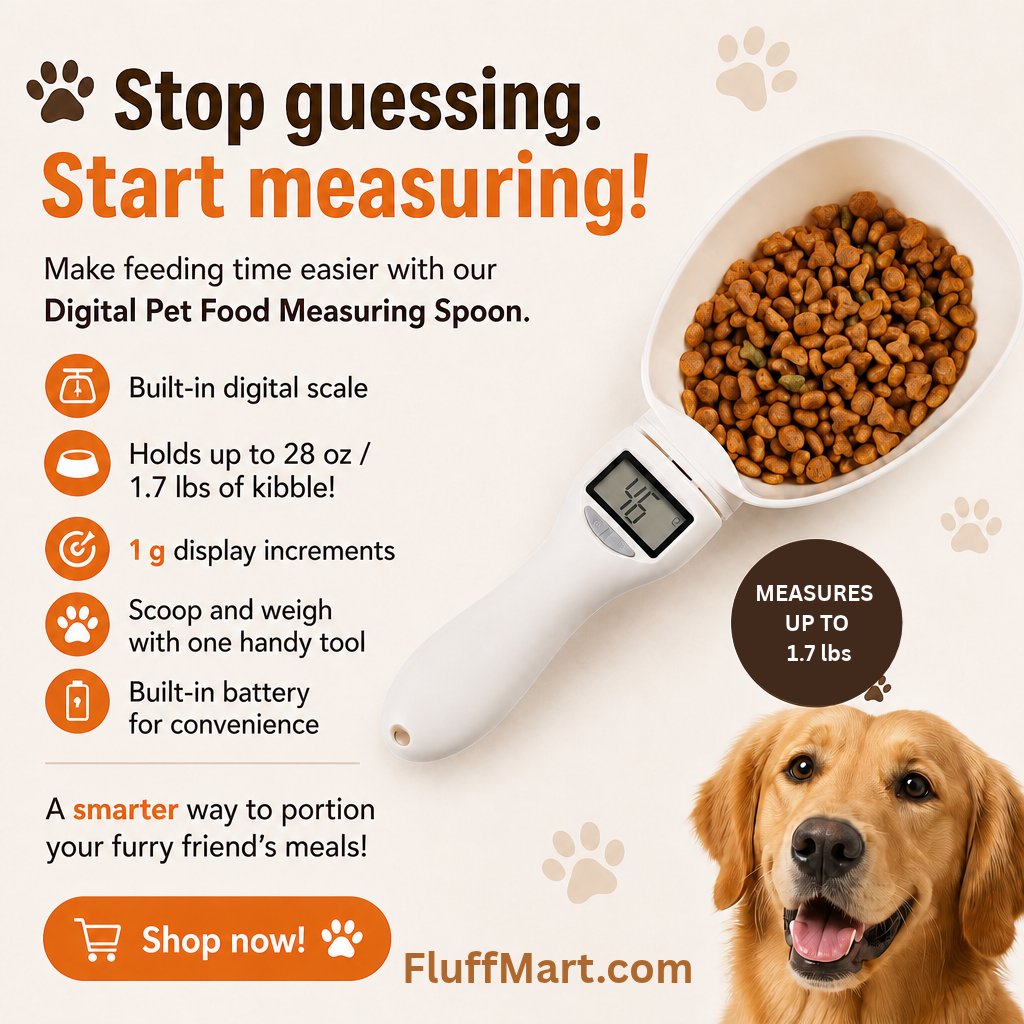
The digital pet food measuring spoon has a built-in digital scale that measures in 1-gram increments, up to 1.7 lbs, and is designed to help measure dog food and other compatible pet food.
When Your Cat Eats Too Fast and Vomits: Regurgitation vs. Vomiting
Red flags that mean a vet visit, not a slow feeder:
- Vomiting several times a week
- Weight loss or a sudden drop in appetite
- Blood in the vomit
- Refusing food entirely
The Cornell University College of Veterinary Medicine cat health resources notes that frequent regurgitation still deserves a professional look. Rule out medical causes before you blame the bowl.
Digital Pet Food Measuring Spoon →
Slow Feeder Bowl for Cats: How to Choose and Introduce One
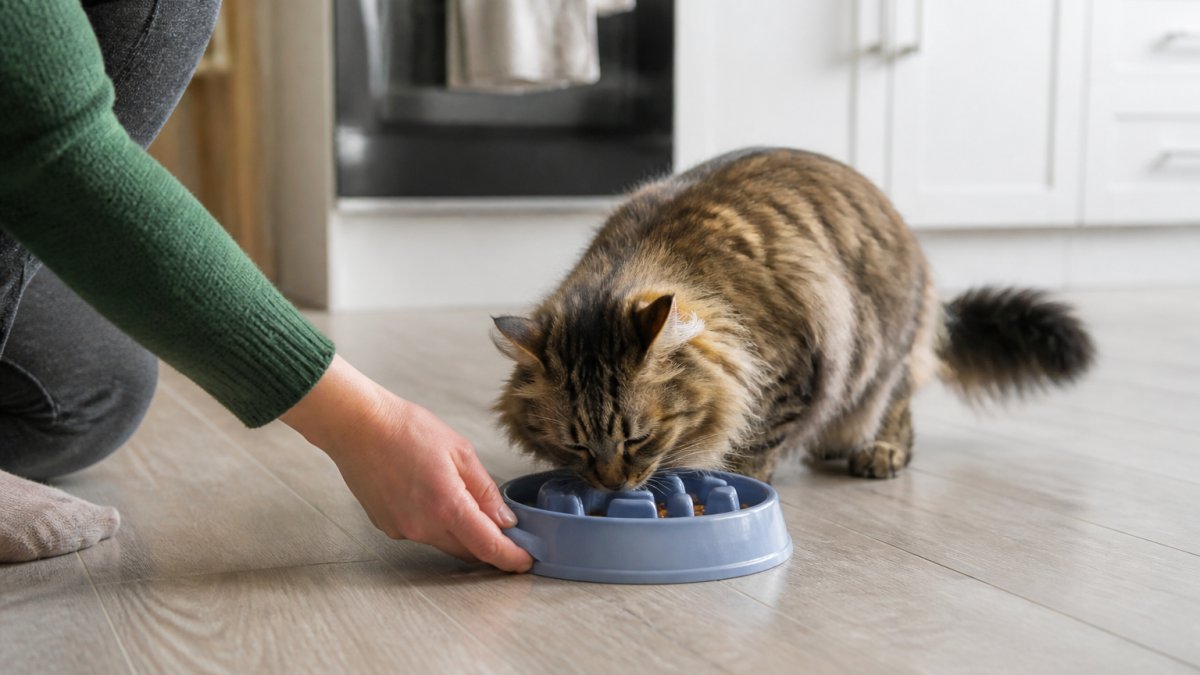
How to pick one:
- Shallow depth so whiskers don't touch the sides
- Wide, gentle ridges rather than tight crevices
- Non-slip base for enthusiastic eaters
- Dishwasher-safe material for easy cleaning
When choosing a slow feeder bowl, look for these features.
Feature |
Why it matters |
|---|---|
Shallow depth |
Keeps whiskers from touching the sides |
Wide, gentle ridges |
Better than tight crevices |
Non-slip base |
Suits enthusiastic eaters |
Dishwasher-safe material |
Makes cleaning easy |
Puzzle Feeder for Cats: Turning Mealtime Into Foraging
- Treat balls that release food as they roll
- Maze boards with sliding compartments
- Lick mats for wet food and spreadable treats
- DIY slow feeders using a muffin tin and tennis balls
Our suction cup interactive cat teaser toy encourages chasing, batting, and indoor play.
Feeding Cats Smaller Meals: Portions, Frequency, and Multi-Cat Fixes
Track your results. Note meal duration and any regurgitation for a week. If meals still finish in seconds, adjust the feeder or portion size. A vet can help if symptoms continue.
Frequently Asked Questions
Why does my cat eat too fast and throw up?
Fast eating stretches the stomach and triggers regurgitation, where undigested food comes back up shortly after a meal, often in a tube shape and without much warning. Competition in a multi-cat household, food insecurity, and simply being hungry after long gaps between meals are common causes. If your cat eats too fast and vomits repeatedly, loses weight, or seems lethargic, call your veterinarian to rule out a medical issue.
Do slow feeder bowls work for cats?
Yes, for most cats. A slow feeder bowl for cats uses ridges, mazes, or raised sections that force your cat to work around obstacles, which stretches a two-minute meal into a longer session and reduces how much air is swallowed. Start with a shallow design, put a little wet food in the grooves so your cat learns the layout, and supervise the first few meals. Cats with flat faces or dental problems may need a shallower option.
How do I feed my cat smaller meals without changing its food?
Split the daily portion into three to four smaller meals instead of one or two large ones, using the same food. Measure each portion with a digital scale so the total stays the same, then space meals evenly across the day. An automatic feeder can handle early-morning or midday meals if your schedule is tight. Feeding cats smaller meals this way reduces hunger-driven gulping without any diet change.
Fast eating is fixable, but it takes the right tools and a little patience. Fluff Mart carries precision feeding solutions designed to make mealtime calmer, including measuring spoons, puzzle feeders, and enrichment toys tested for safety and effectiveness. Get started with Fluff Mart and build a feeding routine your cat can slow down and enjoy.
